
Scan, Ride, Arrive: How QR Codes Are Making Public Transportation Smarter
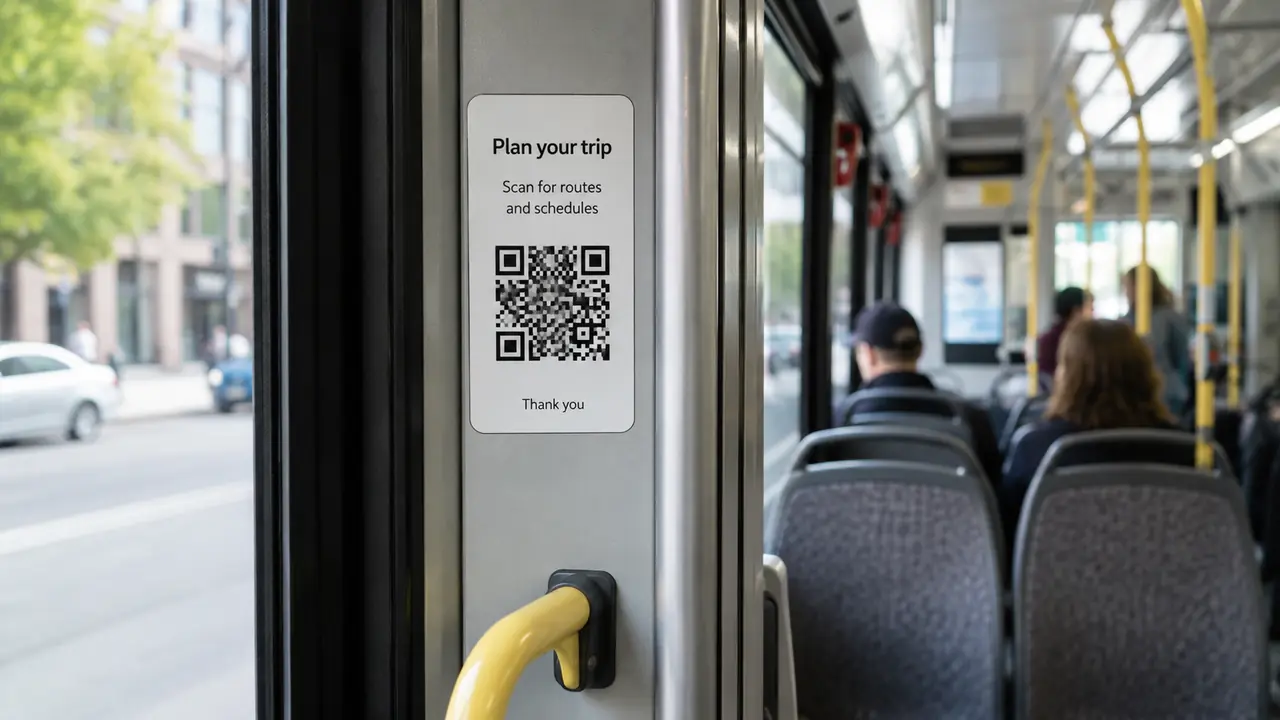
Public transportation has always been about movement. People need to get from home to work, from the airport to the hotel, from one side of the city to the other, and sometimes from "I am already late" to "please let this train be on time."
But modern commuting is no longer only about buses, trains, trams, and metro lines. It is about information. Riders want schedules, tickets, route changes, safety updates, payment options, station maps, accessibility details, and service alerts - preferably without downloading five different apps or reading a poster designed in the emotional style of a government tax form.
This is where QR codes can quietly do a lot of work.
A QR code on a bus stop, train platform, ticket machine, metro map, or vehicle window can connect passengers to real-time information in seconds. It can simplify ticketing, reduce paper waste, improve accessibility, support tourism, and make public transport feel easier to use - one of the many everyday places QR codes now appear.
For commuters, that means fewer guesses. For transport operators, it means smoother communication. For everyone else standing on a platform wondering whether the next train exists spiritually or physically, it means hope.
Why QR Codes Fit Public Transportation So Well
Public transportation is full of moments where people need quick answers. They are not sitting comfortably at a desk with unlimited time. They are walking, waiting, carrying bags, holding coffee, checking the weather, trying not to miss a connection, or asking themselves why they trusted a five-minute transfer.
QR codes work well in this environment because they are fast, simple, and space-efficient. A small printed code can lead to a live timetable, a mobile ticket page, a route planner, a station map, or a disruption alert.
Traditional signs and printed schedules still matter. Not every rider wants to scan a code, and not every phone battery survives the commute like a hero. But QR codes add a flexible digital layer that can be updated without replacing every poster, map, or timetable in the network.
That is the real advantage: public transport information changes constantly. QR codes help printed infrastructure stay useful even when the schedule changes. (That flexibility comes from dynamic QR codes, which let you change the destination without reprinting the sign.)
1. Real-Time Schedules at Stops and Stations
One of the most practical uses of QR codes in public transportation is real-time schedule access. A passenger scans a code at a bus stop or station and instantly sees when the next vehicle is coming.
This is far better than staring into the distance with the confidence of a medieval astronomer.
A QR code can link to:
- Live arrival times
- Route delays
- Platform changes
- Service interruptions
- Alternative connections
- Last train or last bus information
- Weather-related updates
- Night service schedules
For example, a transit system like Transport for London could use QR codes at bus stops to help riders open live route information. A system like New York's MTA can connect riders to service updates, elevator status, or subway line changes. Smaller city bus networks can do the same with a simple mobile page or route-tracking tool.
The value is immediate. The passenger does not need to search manually. The stop itself becomes a direct link to the answer.
2. Mobile Ticketing Without Extra Friction
QR codes can also make ticketing easier. Instead of printing paper tickets, passengers can scan a QR code to buy a fare, validate a ride, download a pass, or open a transport payment page.
This works especially well for:
- Airport shuttles
- Regional buses
- Event transport
- Tourist routes
- Park-and-ride services
- Ferries
- Private shuttle networks
- Intercity coaches
A passenger arriving in a new city may not know which ticket machine to use or which fare zone applies. A QR code near the station entrance can lead to a clear mobile ticketing page with route options and prices.
Think of brands and systems like Eurostar, FlixBus, or Amtrak. Their passengers often plan and manage journeys digitally. QR codes can support that habit by connecting physical locations - platforms, signs, boarding areas - to ticketing and trip information.
The best ticketing QR codes do not make people work. They guide passengers straight to the right fare or pass. No maze. No "please create an account before buying a one-way ticket to three stops away." Nobody has time for that at 8:17 a.m.
3. Better Route Planning for Tourists and New Riders
Public transportation is easy when you already know the system. For tourists, students, new residents, and occasional riders, it can feel like solving a puzzle while standing in public and pretending you are calm.
QR codes can help by linking to route planners, city transport maps, fare explanations, and multilingual guides.
A QR code at a metro station could say:
"New here? Scan for the easiest route."
A tourist scans it and sees a mobile page with popular destinations, airport routes, day pass options, museum stops, and simple transfer instructions. This is much friendlier than expecting visitors to understand a full transit map immediately. Some maps look like colorful spaghetti with ambition.
Cities with large tourist flows - such as Paris, London, Tokyo, Barcelona, or Singapore - can use QR codes to make transport information more approachable. Even smaller cities can benefit, especially around airports, train stations, hotels, event venues, and city centers.
The goal is not to replace maps but to give people a guided version when they need it.
4. Reducing Paper Waste From Timetables and Flyers
Transit agencies print a lot: route schedules, maps, temporary notices, fare information, detour signs, safety leaflets, campaign flyers, and service updates. Some of it is necessary. Much of it becomes outdated quickly.
QR codes can reduce this waste by moving frequently changing information online.
Instead of printing a new timetable every time a route changes, a transit operator can print a durable sign with a QR code that links to the current schedule. Instead of handing out paper maps at every information desk, stations can display QR codes leading to downloadable maps. Instead of posting multiple service notices, one QR code can lead to live updates.
This is not only greener - it is usually cheaper.
Printing, distributing, replacing, and storing paper materials costs money. QR codes reduce the need for constant reprinting. They also help keep passengers informed when plans change faster than paper can keep up.
Paper schedules still have a role, especially for accessibility and inclusivity. But when information changes frequently, digital access makes sense. (The same logic cuts paper waste and printing costs across any business.)
5. Service Alerts That Actually Reach People
A service alert is only useful if riders see it before it ruins their plan.
QR codes can connect passengers to live alerts for specific routes, stations, or lines. A code at a bus stop can lead to alerts for that exact stop. A code on a train platform can show updates for that line. A code inside a vehicle can link to transfer information.
This is better than a generic notice page where the passenger has to search manually.
For example:
- A tram stop QR code opens updates for that tram line.
- A station QR code shows elevator outages and platform changes.
- A bus shelter QR code displays detours affecting that stop.
- A ferry terminal QR code shows weather-related cancellations.
- An airport shuttle QR code shows pickup times and delays.
A transport system like SNCF in France or Deutsche Bahn in Germany could use QR codes to connect station signage with live disruption information. Local operators can apply the same principle on a smaller scale.
The key is specificity. People do not want "network information." They want to know what is happening to their ride.
Practical QR Code Ideas for Different Transport Modes
Buses
Use QR codes at stops for live arrival times, route maps, mobile ticketing, and service alerts. Inside buses, codes can support feedback, lost items, safety reporting, and transfer information.
Metro and Subway
Place QR codes near entrances, ticket machines, platforms, and maps. They can link to line status, station navigation, accessibility routes, fare information, and tourist guides.
Trams and Light Rail
QR codes can help with platform schedules, route changes, city center maps, event traffic updates, and transfer planning.
Trains
Use QR codes for platform details, carriage information, ticket validation, station services, onboard menus, Wi-Fi access, and customer support.
Ferries
QR codes can provide departure times, weather alerts, safety instructions, route maps, ticketing, and boarding information.
Airport Shuttles
QR codes can show pickup points, schedules, hotel transfer details, payment options, and luggage policies.
Each mode has different passenger needs, but the same principle applies: put the QR code where the question appears.
How to Design QR Codes for Commuters
Commuters are not patient website testers. They are busy people trying to get somewhere. QR code design should respect that.
Use clear labels. Make the code large enough. Place it at eye level when possible. Avoid reflective surfaces. Test it in poor lighting. Keep enough white space around the code. Make sure the destination loads quickly. Do not ask users to download an app unless absolutely necessary.
The call to action should be specific:
- "Scan for live arrivals"
- "Scan to buy a ticket"
- "Scan for route changes"
- "Scan for station map"
- "Scan for accessibility info"
- "Scan to report an issue"
- "Scan for airport shuttle times"
Avoid vague copy like "Learn more." Learn more about what? The bus? The meaning of time? The emotional complexity of Zone 2 fares?
Tell people exactly what they get.
Smarter Commutes Start With Better Information
QR codes can make public transportation easier, clearer, and more responsive. They help passengers access live schedules, buy tickets, plan routes, receive alerts, find accessibility information, give feedback, and connect with local services.
They also help operators reduce paper waste, update information faster, and understand what passengers need.
The best QR code systems are not flashy - they appear in the right place, explain their purpose clearly, and lead to a mobile experience that works quickly.
A QR code will not fix every transport problem. It cannot prevent traffic, repair tracks, or convince every train to arrive exactly when promised. If it could, cities would probably build statues of it. But it can reduce confusion, save time, and make the next step easier - which in public transportation is already a meaningful upgrade.
Running a route, a venue, or an event shuttle? Create a free QR code and link riders straight to the schedule, ticket, or map they need.