
How QR Codes Turned Printed Materials Into 900 Registrations: The MDL Marinas Case
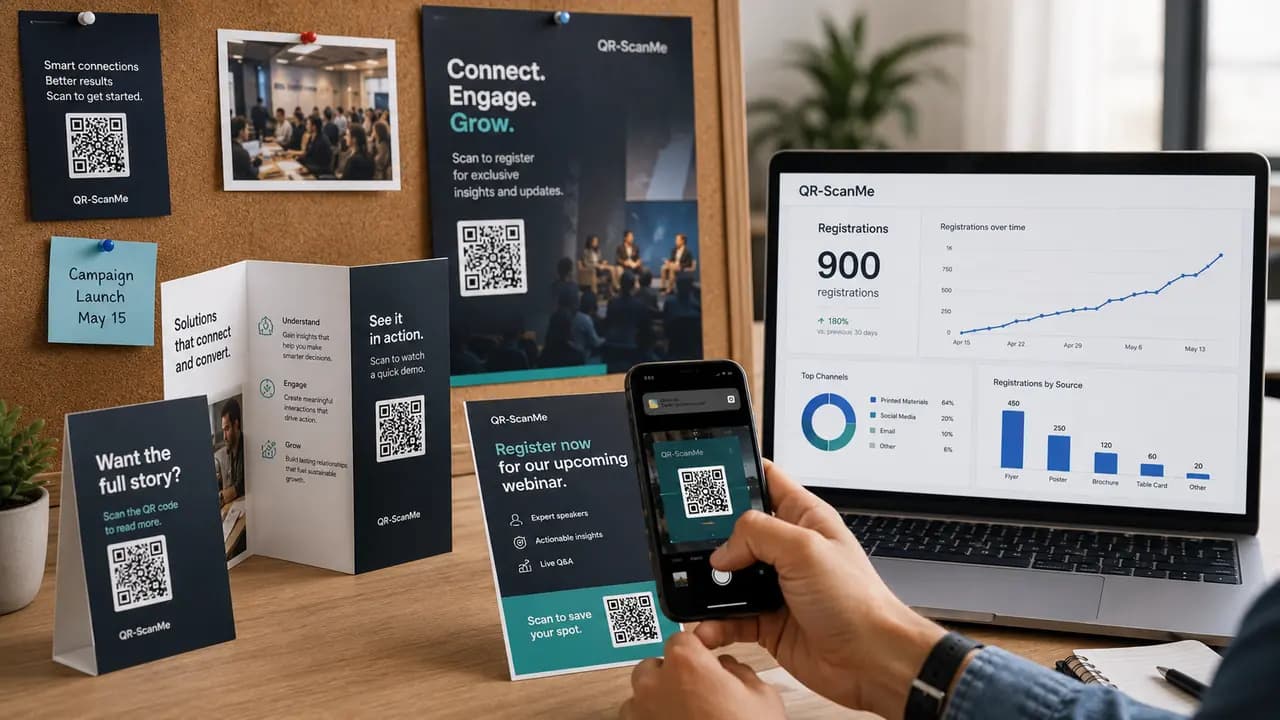
QR codes are often treated as a small technical addition to a marketing layout: a square in the corner, a convenient link, a detail added at the end once everything else is finished. In a well-planned campaign, though, a QR code can do far more than decorate a poster or brochure. It can be the shortest route between attention and action. This piece analyzes a documented example of that idea in practice: MDL Marinas Group, a UK marina operator with around 19 locations, used QR codes inside customer communications and captured roughly 900 registrations through QR-enabled welcome packs. The case is useful because it shows what happens when codes are placed where people already have intent, trust, and a clear reason to scan.
Why This Campaign Is Worth Studying
The campaign worked because the QR code was not treated as a random digital shortcut. It was placed inside a real customer journey. MDL Marinas served a customer base that was already comfortable with printed communication: welcome packs, brochures, direct notices, and on-site posters. Rather than asking people to type links or search online later, the company gave them a direct path from printed material to a digital destination.
The takeaway is consistent with what works elsewhere: QR codes perform best when they appear at the exact point where the reader is already curious, informed, or ready to act.
The Real Problem: Print Could Inform, but Not Convert
The marina business faced a practical challenge. Customers were used to offline communication, while the company needed them to reach updated online information, benefits, offers, and registration pages. A printed URL could technically solve the problem, but only in the clumsiest way. A reader would have to notice the address, remember it, open a browser, type it correctly, and hope they landed on the right page.
A QR code shortens that path. One scan replaces several small but annoying steps. In marketing, those small steps matter, because every extra action gives the reader another chance to stop.
How QR Codes Were Used Across Customer Touchpoints
MDL Marinas did not limit QR codes to a single campaign asset. The company used them across several types of customer communication, which is part of what makes the case instructive for businesses planning their own approach.
- Welcome packs that directed berth-holders to a benefits area.
- Printed notices connected to an award or reward scheme.
- Posters around marina locations that pointed visitors to review pages.
- Benefit cards linking customers to partner offers and special deals.
Each placement carried a different reader intention. A welcome pack encouraged account or membership engagement. A poster invited an immediate scan on location. A benefit card turned a physical object into a digital gateway. Matching the code to the moment is what gives each touchpoint its own purpose.
The 900-Registration Result
The most visible outcome of the campaign was about 900 registrations generated through QR codes included in welcome packs after restrictions began to lift in 2020. The figure is notable not only for its size but for its source: a customer base that was not especially digital-first. Many of these customers were more familiar with traditional communication, yet they still scanned when the context was clear and the value was obvious.
There were other useful signals as well. Posters drew scans from visitors, reward-scheme materials contributed to inquiries, and partner-offer codes attracted berth-holder engagement. Taken together, the results show that QR codes can support several goals at once - signups, offers, reviews, information access, and customer education - not just one narrow conversion.
Three Things That Made the Campaign Work
- The codes had a clear reason to exist. Each one connected to something useful: benefits, reviews, offers, or registration.
- They were placed in materials customers already trusted. A welcome pack carries more attention value than a random flyer because the reader expects it to contain relevant information.
- The scan replaced effort. Instead of typing a long address, searching for the right page, or trying to remember it later, the reader only had to point a camera.
A code becomes useful when it is backed by clear intent, deliberate placement, and a destination worth reaching - and this campaign had all three.
Visibility Matters More Than Decorative Design
One of the clearer lessons here is also the simplest: the codes were made visible. They were not hidden in a corner or blended into the background. They sat front and center, even when that made a layout feel a little less polished. That is a helpful reminder for marketers. A subtle code may please a designer, but a code people actually notice is more likely to produce results.
The same principle applies to any QR campaign. If the scan is the main action, treat the code like a button. It needs space, contrast, and a short instruction beside it. It should not be squeezed into a crowded layout where readers have to look for it. Clean design and a findable code are not in conflict, but when they are, findability should win.
Why QR Codes Beat Printed URLs in This Scenario
A printed URL is passive. It waits for the reader to do the work. A QR code is active, because it turns interest into a direct action. The difference is easy to underestimate until a campaign depends on real response rates.
There is a second issue too. A printed URL often points to a general page, because long campaign links look messy on paper. QR codes remove that constraint. The printed design can stay clean while the scan sends the reader to the exact landing page, registration form, menu, file, social profile, or Wi-Fi access point.
A Practical Breakdown for Website QR Codes
- Use a specific landing page. Do not send campaign traffic to a homepage if the printed material promises a registration, offer, booking, or guide.
- Match the message to the destination. If the poster says "Scan to view offers," the first page after scanning should show offers.
- Keep mobile speed in mind. Most scans happen on phones, and a slow page can waste the scan.
- Test the printed version. A code that reads fine on screen can fail after resizing, printing, laminating, or being placed behind glass.
Website QR codes work best when they reduce uncertainty. The reader should understand why the scan is worth it before opening the camera.
What Social Media QR Codes Can Learn From the Case
Social media QR codes often fail because they ask for a follow without offering a reason. A stronger approach connects the code to an immediate piece of value. A venue can invite people to scan for event photos. A creator can offer behind-the-scenes content. A restaurant can link the code to daily specials, short videos, or customer updates.
The MDL Marinas case is a reminder that curiosity works best when it is guided. Instead of a bare "Follow us," give people a concrete reason to open the profile now. (We cover this angle in more detail in QR codes for social media.)
What Modern Smartphone Behavior Changed
Years ago, QR codes struggled because many people needed a separate scanning app, and that extra step was enough to damage the experience. Today most smartphones scan QR codes directly through the camera, which makes them far more natural for everyday use. People are already used to their phones for tickets, payments, menus, check-ins, maps, and documents. A scan now feels like part of normal behavior rather than a strange technical task.
That shift is part of why campaigns like this one succeeded. The audience did not need to be highly technical. They needed a phone, a visible code, and a reason to scan.
What to Test Before Printing a QR Campaign
Check the code at its final physical size rather than on a screen, from the distance people will actually stand at, and under the lighting of the real location - indoor light, daylight, and dim corners all behave differently. Paper, laminated cards, posters, packaging, and glossy stock each deserve their own test, ideally on several phone models. Then confirm the destination itself: the landing page or file has to open quickly and match the printed promise. For concrete size targets per material, see our guide to QR code sizes in print.
This kind of checking sounds basic, but it prevents expensive mistakes. A code printed on thousands of flyers is only useful if it works in the real environment where people scan it.
Campaign Lessons for Small Businesses
Small businesses can apply this case without copying it exactly. The principle is simple: place QR codes where customers already pause. A salon can use one for booking. A café can use one for Wi-Fi or menus. A repair service can link to a quote form. A real estate agent can put a code on property flyers. A fitness studio can connect a printed schedule to online registration.
In every version, the code should answer one question: what does the reader get after scanning?
Campaign Lessons for Larger Organizations
- Connect offline campaigns to measurable digital actions. This makes print more trackable and easier to optimize.
- Segment destinations by campaign asset. Posters, welcome packs, brochures, and cards should not all point to the same page.
- Design for action, not decoration. A beautiful layout that hides the code weakens the campaign.
- Brief your teams. Staff should know what a reader receives after scanning so they can explain it.
Large organizations tend to have many customer touchpoints. QR codes can link those touchpoints into one smoother digital system.
Final Takeaway
The results of the MDL Marinas campaign came from careful execution rather than the technology itself. The codes appeared inside trusted materials, they were visible, they carried clear instructions, and they connected to useful destinations. They reduced the effort asked of customers who were already engaged.
Generating the codes was never the hard part of this story - that takes a minute. What shaped the result was everything around them: where each code sat, what made someone want to scan, and whether the destination kept the printed promise. Those are the parts worth copying.