
What's the Difference Between QR Codes and Barcodes and Which One Should You Use?
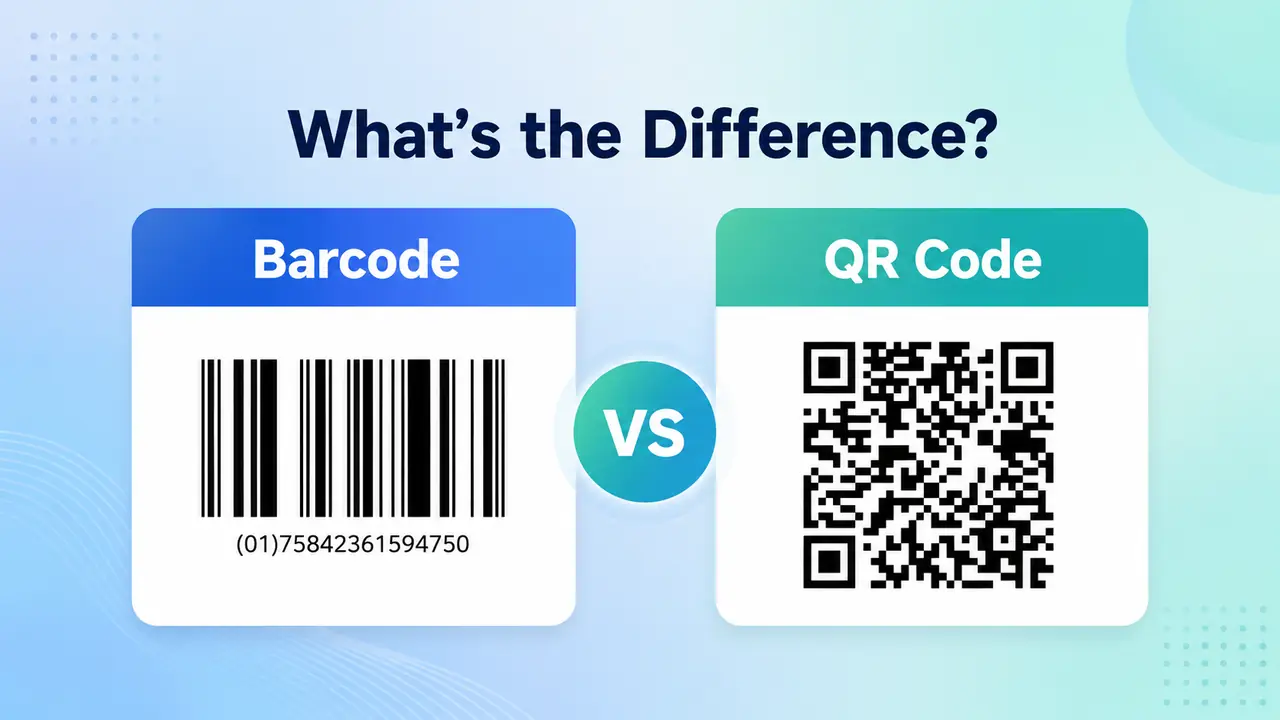
QR codes and barcodes are often treated like cousins.
They both store information. They both get scanned. They both appear on packaging, labels, tickets, products, shelves, and shipping boxes. They both look very serious for something made of lines or squares.
But they are not the same.
A barcode is usually a one-dimensional code made of vertical lines. It is great for identifying products, tracking inventory, and speeding up checkout. A QR code is a two-dimensional code made of small square modules. It can store more information and often links people to digital experiences like websites, menus, payment pages, videos, forms, and product guides. (Here is how QR codes actually work under the hood.)
Both are useful. The right choice depends on what you need the code to do.
What Is a Barcode?
A barcode is a machine-readable pattern, usually made of black vertical lines and white spaces. It stores data in one direction: horizontally.
Most people recognize barcodes from retail products. A cashier scans the barcode, the system identifies the item, and the price appears.
Very efficient. Very supermarket.
Barcodes are commonly used for:
- Retail checkout
- Inventory management
- Shipping labels
- Warehouse tracking
- Product identification
- Library books
- Tickets
- Healthcare supplies
- Manufacturing parts
A barcode is best when the goal is simple identification.
For example, a grocery store scans a barcode on a bottle of water to identify the product and price. The barcode does not need to tell a story, open a video, or invite the customer to join a loyalty program. It just needs to say, "I am this product."
And honestly, that is a respectable job.
Barcodes Are Best for Operational Tasks
Use a barcode when the main goal is quick, accurate identification inside a business system. It is the right choice when a product, package, item, or asset needs to be scanned, recognized, and processed without extra explanation.
Barcodes are especially useful in places like:
- Retail checkouts
- Product SKU systems
- Warehouses
- Shipping and logistics
- Asset management
- Libraries
- Manufacturing lines
- Healthcare supply tracking
For example, a store uses barcodes to identify items at the register. A warehouse uses them to count and locate stock. A logistics company uses them to move parcels through sorting and delivery systems.
A barcode is not built to entertain customers or launch a digital experience. It has one job - matching a printed pattern to a database row - and it has done that job reliably since grocery checkouts adopted it in the 1970s.
QR Codes Are Best for Digital Next Steps
Use a QR code when a physical object needs to send someone somewhere digital. It is the right tool when the scan should end with the customer on a page - a menu, a form, a payment screen - rather than in a database lookup.
A QR code works well for things like:
- Opening a restaurant menu
- Collecting customer reviews
- Growing an email list
- Sending people to social media
- Accepting payments
- Sharing product tutorials
- Registering a warranty
- Checking in at an event
- Delivering coupons
- Downloading an app
- Explaining product sourcing or ingredients
- Connecting to Wi-Fi
- Booking an appointment
- Capturing leads
For example, a restaurant can use a QR code to open its digital menu. A skincare brand can link customers to routine advice. A hotel can use QR codes for Wi-Fi, room service, or guest guides. A food truck can use one for mobile payments and weekly location updates.
The point is to catch the customer at the moment of interest: one scan instead of searching, typing a URL, or guessing which page they were supposed to find. (New to making them? See what a QR code generator is.)
Can QR Codes Replace Barcodes?
Sometimes, but not always.
QR codes can store product data and may be used in retail and packaging systems. However, traditional barcodes are still widely used because retail infrastructure, checkout systems, warehouses, and supply chains are built around them. (The shift toward 2D codes is part of the future of QR codes.)
For many businesses the answer is not one or the other - packaging routinely carries both.
A product package might use:
- A barcode for checkout and inventory
- A QR code for customer engagement
That is common and practical.
The barcode helps the store sell the item; the QR code picks up the customer afterwards - product registration, a review request, a reorder link, a loyalty program.
FAQ: QR Codes vs Barcodes
Is a QR code a type of barcode?
Yes, a QR code is a type of two-dimensional barcode. But in everyday business language, "barcode" usually refers to the traditional one-dimensional line-based code.
Which stores more data: QR code or barcode?
A QR code stores more data because it uses a two-dimensional pattern instead of only vertical lines.
Can smartphones scan barcodes?
Some apps can scan traditional barcodes, but smartphone cameras usually handle QR codes more easily for customer-facing experiences.
Are QR codes better for marketing?
Yes. QR codes are usually better for marketing because they can open landing pages, menus, videos, forms, reviews, coupons, and social profiles.
Are barcodes still useful?
Absolutely. Barcodes remain extremely useful for checkout, inventory, logistics, and product identification.
Should packaging use both?
Often, yes. Use a barcode for retail systems and a QR code for customer-facing content.
Need the QR side? Create your QR code for free and point it at the content your customers want.