
QR Codes Explained: Myths, Realities, and the Future
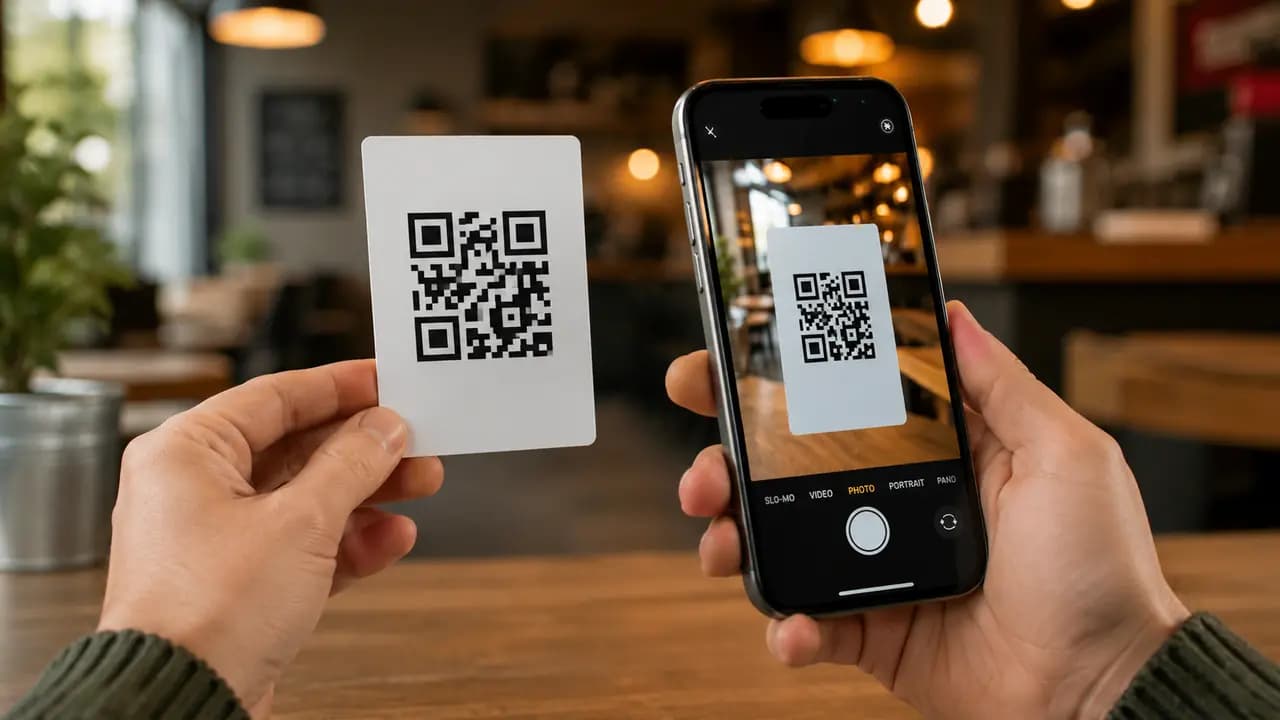
In 1994, an engineer named Masahiro Hara sat in a break room at Denso Wave, a Toyota subsidiary, and found himself staring at a game of Go, its black and white stones arranged across a 19x19 grid. He wasn't relaxing - he was solving a problem that had plagued assembly lines for years. Barcodes could only hold about 20 characters. Car parts had grown so complex, so numerous, and so dependent on precise tracking that the old one-dimensional stripe had simply run out of room.
What Hara and his team built over the next year was deceptively elegant. By moving from one dimension to two, they could encode thousands of characters in a stamp smaller than a thumbnail. They called it the Quick Response code, and Denso Wave made the patent open to the world. That decision - to make it free - is the quiet reason QR codes are everywhere today and not a proprietary technology owned by a single corporation charging licensing fees.
For a long time, though, almost nobody outside of Japanese manufacturing cared. (Curious how those codes are generated today? See what a QR code generator is and how it works.)
The Architecture of a Square You Never Really Look At
Most people scan QR codes dozens of times a month without any idea what they're looking at. The structure is not random noise - every region of that grid has a specific, mandatory job. (For a plain-English tour, see how QR codes actually work.)
- Finder Patterns
The three large squares in three corners are called finder patterns. Their job is purely positional - a camera identifies them instantly and uses their arrangement to determine the code's size, angle, and orientation, even if the image is rotated or partially obstructed.
- Timing Patterns
Alternating black and white modules run between the finder patterns along both axes. They help the decoder determine the grid's coordinate system and precisely locate every data cell - essential when scanning at an angle or on a curved surface.
- Error Correction Blocks
This is the part most people don't expect. Up to 30% of a QR code can be physically destroyed - scratched, covered, dirty - and it will still scan correctly. The code uses Reed-Solomon error correction, the same algorithm used in CDs and deep-space communications.
- Data & Format Information
The actual payload - a URL, a phone number, plain text, a WiFi credential - is encoded here using one of four modes depending on the character types present. Format information cells tell the decoder which error correction level was used and which data masking pattern was applied.
- Quiet Zone
The white border around the entire code. Not decorative. If this margin is absent or crowded by nearby visual elements, many scanners simply fail to detect the code at all. Four modules wide is the minimum; most printers and designers ignore this rule constantly.
What People Get Wrong About QR Codes
The pandemic turned QR codes from a niche convenience into an ambient feature of daily life. It also turned them into a canvas for misinformation. Here are the myths that won't seem to die.
Myth: scanning a QR code can install malware on your phone automatically. A QR code is a container for text. Scanning one does nothing on its own - it opens a URL in your browser, which then behaves like any website. The risk is the same as clicking an unknown link: the destination could be malicious, but the act of scanning itself doesn't execute code on your device. Your browser's standard sandbox applies.
Reality: phishing via QR code - "quishing" - is a genuine and growing threat. The real danger is not the scan; it's the URL. Attackers place fake QR stickers over legitimate ones in restaurants, parking meters, and public transit stops. The destination can harvest credentials or install a drive-by download through a browser vulnerability. The deception is social, not technical, but the consequences are real.
Myth: you need a special app to scan QR codes. Since iOS 11 in 2017 and Android's native camera integration shortly after, virtually every mainstream smartphone reads QR codes natively through its default camera app. The dedicated scanner app era ended years ago. Most people who still use third-party scanner apps don't realize they no longer need them.
Myth: black-and-white is required, and color or logos break QR codes. Not true, with important caveats. The scanner depends on contrast between the module color and the background, not specifically on black and white. Custom QR codes with brand colors and embedded logos work reliably as long as sufficient contrast is preserved and the error correction level is set high enough to compensate for the logo covering part of the data region. This is why logos embedded in QR codes should never exceed roughly 20-25% of the total area. (If a custom code will not scan, here is why QR codes fail to scan and how to design high-scanning codes.)
How Covid-19 Did What a Decade of Marketing Couldn't
In early 2020, the QR code was on the cultural shelf - used, but not dominant, quietly waiting for a reason to matter. What followed was the most accelerated mass adoption of a single interface technology since the touchscreen. The reasons were mundane and urgent in equal measure.
The touchless menu was not a design trend. It was a public health decision made simultaneously by millions of restaurants, and it permanently changed what people expect from physical spaces.
- Contactless menus went from a novelty to a default format for restaurants across the US, UK, and Europe within six weeks of widespread lockdowns. Laminated paper menus, once a dining staple, became a liability - shared, touched, hard to sanitize at volume.
- Vaccine passports and test certificates in dozens of countries were encoded in QR format, training hundreds of millions of people to think of the codes as documents, not just links. This shift in mental model - code as credential - has had lasting implications for identity and access systems.
- Payment infrastructure accelerated sharply, particularly in markets that had not yet transitioned to tap-to-pay dominance. Brazil's Pix system, launched in late 2020, used QR codes as its primary interface and processed over 4 billion transactions in its first year alone.
- Retail inventory tracking and in-store information overlays (scan a shelf tag to see reviews, stock levels, or origin stories) expanded significantly as brands realized that customers were now habituated to the gesture.
- Event ticketing migrated further toward QR-based mobile passes, reducing fraud vectors compared to printable barcodes and enabling real-time cancellation and transfer capabilities that paper never allowed.
By 2023, studies estimated that more than 89 million smartphone users in the United States alone had scanned a QR code at least once in a single month. A technology born in an automotive factory had become, quietly, infrastructure.
The Next Decade: Where QR Technology Is Heading
The QR code of 2026 is not the same artifact as the QR code of 2010, even though it looks identical. The surrounding infrastructure - dynamic redirects, analytics dashboards, AI-driven content personalization, cryptographic signing - has transformed it from a printed shortcut into a managed endpoint: the square stays the same, everything behind it is now software. The next decade will push that further. (For where this is heading next, see the future of QR codes.)
- Digital product passports are arriving as a regulatory requirement in the European Union. By 2030, a significant category of physical goods sold in the EU will be required to carry a machine-readable identifier - almost certainly QR-based - linking the product to its full material composition, repairability data, and end-of-life disposal instructions. This is not a marketing feature. It's mandatory supply chain transparency, and it will touch every manufacturer selling into the European market.
- Cryptographically signed QR codes address the dynamic redirect trust problem directly. When the encoded data includes a cryptographic signature tied to a specific issuer - a government, a brand, a healthcare provider - the scanner can verify authenticity before presenting the destination. Several national identity and prescription systems are already deploying this architecture.
- Continuous ambient scanning is coming with AR glasses and smart glasses at consumer scale. Rather than consciously aiming a phone at a code, a device worn on your face will passively recognize QR codes in your environment and surface relevant information in your field of view. The friction drops to zero. The implications for advertising, retail, and urban information design are substantial.
- AI-paired contextual delivery means the content served behind a QR code doesn't have to be a static webpage. It can be a dynamic AI interaction - a product question answered in natural language, a prescription explained in the patient's preferred language, a building's maintenance history surfaced in conversational form. The code becomes a handoff point between the physical world and an intelligent agent.
- Anti-counterfeit applications in luxury goods, pharmaceuticals, and food supply chains are scaling rapidly. The QR code on a bottle of wine can carry a cryptographic fingerprint registered at the vineyard. A scanner can verify the bottle hasn't been refilled. A phone app can tell a consumer in real time whether the medication in their hand has been recalled. These are operational systems today, not theoretical ones.
The Geometry of Invisibility
The QR code's greatest design achievement is that it became invisible. Not literally - you see them everywhere, on menus and museum walls and milk cartons and business cards - but cognitively invisible, in the way that light switches and door handles are invisible. They're part of the room. You reach for them without thinking.
What makes it interesting now is that the plain-looking square is carrying more weight than it ever was designed for. Authentication. Product history. Medical credentials. Payment. Access control. The simple thing is doing complicated work, and the work is growing. Whether the QR code remains the container for that work, or whether some successor technology eventually absorbs its role, the underlying problem it solved - bridging the physical world and the digital one with zero hardware cost at the reader - remains one of the genuinely hard problems in human-computer interaction. For now, the little square is winning.
Want one of your own? You can make your own QR code for free in seconds - no app required.